How AI Is Changing Software Engineering for Freshers and Juniors
A practical look at how AI tools are reshaping learning, coding, and career growth for freshers and junior software engineers.
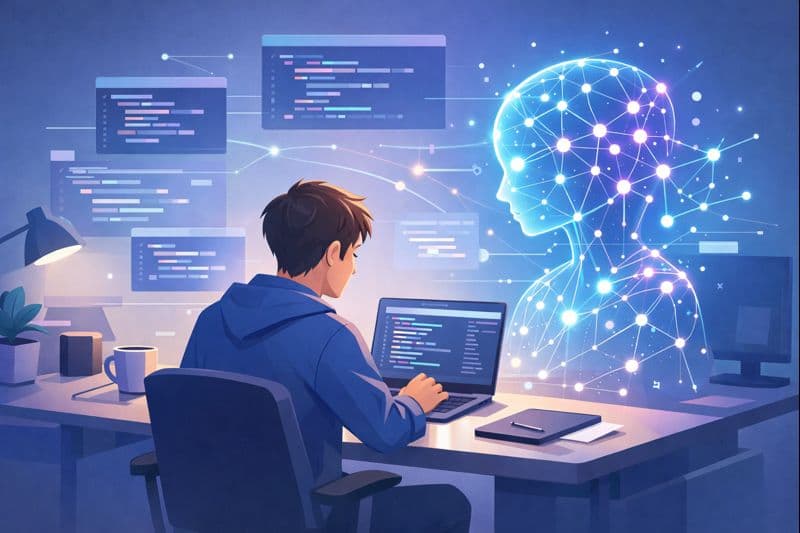
Artificial Intelligence (AI) is no longer a distant concept reserved for research labs or big tech companies. It has become a daily companion for software engineers—especially for freshers and junior developers who are just entering the industry. From learning to code to shipping production-ready features, AI is reshaping how early-career engineers grow and work.
Faster Learning Curve
One of the biggest challenges for freshers is understanding large codebases and unfamiliar technologies. AI-powered tools like code assistants and chat-based helpers can explain concepts in simple terms, generate examples, and even break down complex errors. Instead of spending hours searching through documentation or forums, juniors can get instant guidance, making learning more efficient and less overwhelming.
Smarter Coding Assistance
AI tools can now autocomplete code, suggest better implementations, and highlight potential bugs before code even runs. For junior engineers, this acts like having a senior developer sitting next to them. While AI should not replace understanding fundamentals, it helps reduce friction and builds confidence—especially when working with new frameworks or languages.
Better Debugging and Problem Solving
Debugging is often frustrating for beginners. AI can analyze error messages, suggest possible fixes, and explain why something went wrong. This is extremely valuable for juniors because it encourages learning through problem-solving instead of blindly copying solutions.
Productivity Without Burnout
Freshers often feel pressure to perform at the level of experienced developers. AI helps bridge that gap by automating repetitive tasks like writing boilerplate code, generating test cases, or formatting documentation. This allows juniors to focus on logic, architecture, and clean code, rather than getting stuck on repetitive work.
New Skill Expectations
AI is also changing what companies expect from junior engineers. Knowing how to use AI tools effectively, ask good questions (prompting), and validate AI-generated output is becoming an important skill. Engineers who treat AI as a collaborator—not a shortcut—stand out faster.
What AI Cannot Replace
Despite all its advantages, AI cannot replace critical thinking, system design understanding, and real-world experience. Freshers must still learn core concepts like data structures, algorithms, version control, and debugging fundamentals. AI works best when paired with strong basics.
Conclusion
For freshers and junior software engineers, AI is not a threat—it’s an accelerator. When used responsibly, it shortens the learning curve, boosts productivity, and helps engineers grow faster. The key is to learn with AI, not depend on it blindly. Those who adapt early will be better prepared for the future of software engineering.
AI is changing how we write code—but humans still decide what to build and why.